
Living room drapes have to do more than look beautiful in a photo. They soften glare during the day, create privacy at night, frame the largest architectural feature in the room, and set the tone for the furniture around them. The best living room drapes are usually floor-length custom panels in linen, cotton, velvet, or a performance blend, chosen according to how much light, privacy, and visual weight the room needs.
If you are choosing drapes for a living room, start with the room's real job. A formal sitting room can handle richer fabric and more dramatic pleats. A family room needs washable, durable fabric that survives sun, pets, and daily use. An open-concept living space often needs drapes that coordinate with the kitchen and dining area instead of competing with them. This guide walks through the decision in the same order a designer would: fabric, light control, length, color, header style, hardware, and common room scenarios.
Quick Answer: What Type of Drapes Are Best for Living Rooms?
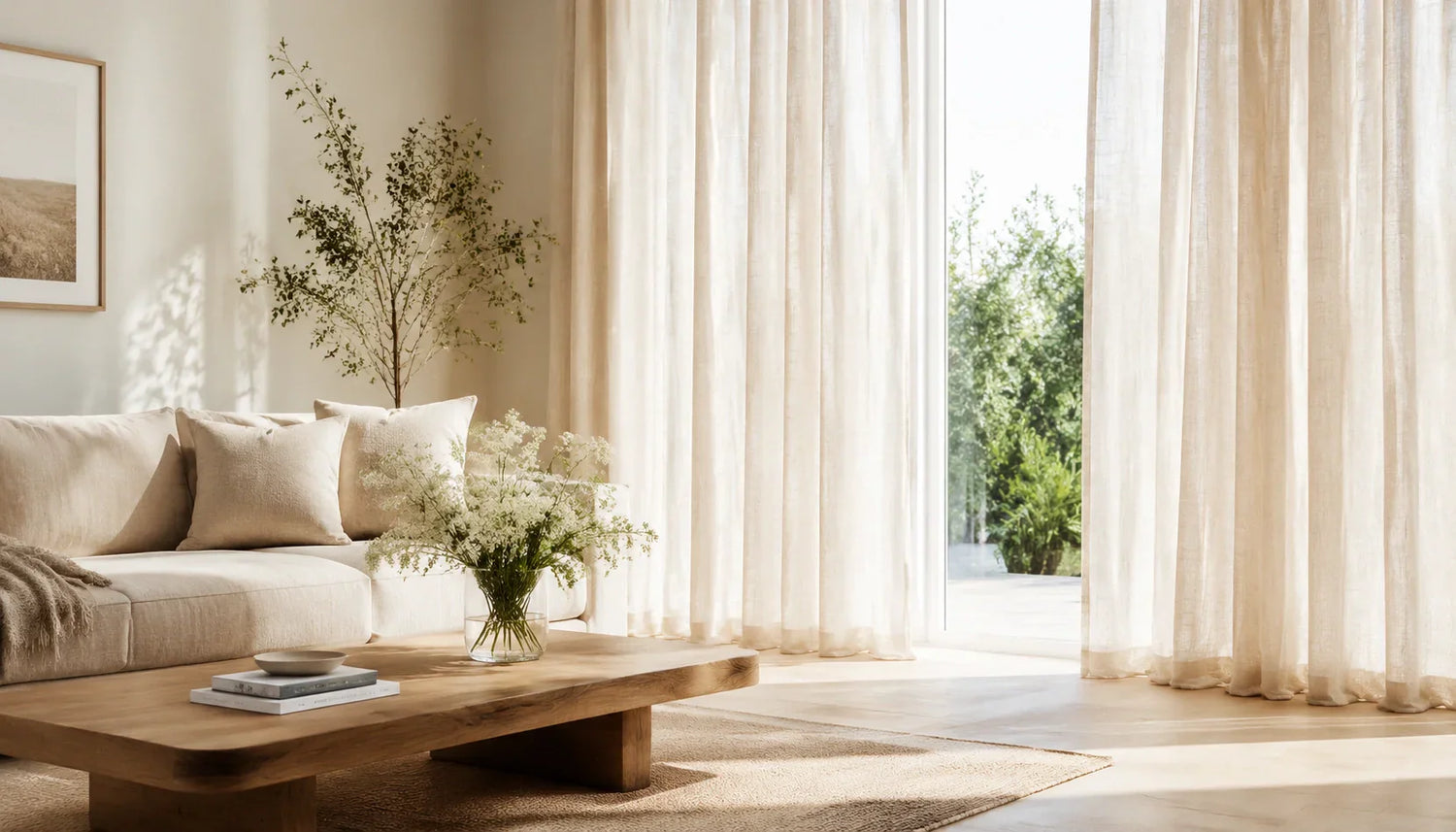
For most living rooms, the safest and most versatile choice is custom floor-length linen or linen-blend drapes with privacy lining. Linen gives the room a relaxed, high-end texture without feeling heavy. A lining protects the fabric from sun damage, improves the way the panels hang, and gives better privacy after dark. If the room gets intense afternoon sun, upgrade to room-darkening or blackout lining. If the room is formal or needs more sound softening, velvet or a heavier woven fabric can work beautifully.
| Living Room Need | Best Drapery Choice | Why It Works |
|---|---|---|
| Soft natural light | Semi-sheer linen or light-filtering linen blend | Diffuses glare while keeping the room bright |
| Night privacy | Lined linen, cotton, or polyester blend | Prevents silhouettes and improves fabric drape |
| Formal style | Velvet, jacquard, or heavier woven panels | Adds visual weight and a tailored finish |
| Large sunny windows | Room-darkening or blackout-lined drapes | Protects furniture and reduces heat gain |
| Open-concept rooms | Neutral linen or performance blend panels | Looks cohesive from multiple sightlines |

Best Fabrics for Living Room Drapes
Fabric is the decision that affects almost everything else: light, privacy, cleaning, cost, fullness, and the mood of the room. Living rooms usually need a fabric that feels finished enough for guests but practical enough for daily life. Here is how the most common choices compare.
Linen and linen blends: best overall choice
Linen is the easiest recommendation for living room drapes because it looks natural, expensive, and relaxed at the same time. Pure linen has beautiful movement but can wrinkle and stretch. A linen blend, especially linen mixed with polyester or cotton, keeps much of the texture while improving durability and wrinkle resistance. Choose unlined or privacy-lined linen for a bright room; choose blackout-lined linen if the living room faces west or has a television that catches glare.
Velvet: best for formal or dramatic living rooms
Velvet drapes make a living room feel warmer, quieter, and more layered. They are especially good for tall windows, traditional rooms, moody color palettes, and spaces where you want the window treatment to be a design feature. The trade-off is visual weight. In a small or low-ceiling living room, dark velvet can make the room feel smaller unless it is balanced with light walls and simple hardware.
Cotton: best for classic, easygoing rooms
Cotton drapes feel familiar and clean. They work well in transitional homes, family rooms, cottages, and casual living spaces. Cotton is less textured than linen and less formal than velvet, so the finished look depends heavily on color, print, lining, and header style. For living rooms, cotton usually looks best with lining because the added structure helps the panels hang more evenly.
Performance blends: best for busy homes
Performance polyester blends are not just a budget option. They can be a smart choice for homes with children, pets, strong sun, or frequent cleaning needs. The key is choosing a fabric with a good hand feel, not a shiny or stiff finish. A high-quality blend can imitate linen texture while resisting fading and wrinkling better than many natural fibers.
If you are comparing fabrics, do it in the actual living room. Hold each swatch near the window in morning light, afternoon light, and evening lamp light. A fabric that looks creamy online can turn yellow under warm bulbs or gray in north-facing light. Order free fabric swatches before you choose →
How Much Light and Privacy Do Living Room Drapes Need?

The right living room drape depends on when the room needs privacy. Many people choose fabric based on daytime appearance, then discover at night that the room is visible from the street. If privacy matters after dark, sheer curtains alone are not enough. They soften daylight beautifully, but once the room is lit from inside, silhouettes are visible.
For most living rooms, there are three useful light-control levels:
- Light-filtering drapes keep the room bright while softening glare. Best for rooms that need atmosphere, not full privacy.
- Privacy-lined drapes block clear views from outside and give the fabric more body. Best for street-facing living rooms.
- Room-darkening or blackout-lined drapes reduce strong sun, protect furniture, and help with TV glare. Best for west-facing windows or media rooms.
A layered treatment gives the most flexibility: sheers for daytime softness and outer drapes for evening privacy. This is especially useful when the living room is used for both entertaining and quiet nights at home. Explore sheer curtain options →
Should Living Room Drapes Touch the Floor?
Yes, living room drapes usually look best when they reach the floor. The most polished option is a panel that stops about 1/2 inch above the floor, sometimes called a "kiss" length. It looks tailored, avoids dragging, and is easier to clean around. A slight break at the floor can feel relaxed and traditional. A longer puddle can be romantic, but it is less practical in a family living room because dust, pets, and foot traffic disturb the fabric.

| Length | Best For | Designer Note |
|---|---|---|
| 1/2 inch above floor | Most living rooms | Clean, tailored, and practical |
| Barely touching floor | Formal rooms | Elegant, but measurements must be precise |
| 1 to 3 inch break | Relaxed traditional rooms | Softens the line at the floor |
| Puddle | Low-traffic formal rooms | Dramatic, but not ideal with pets or daily use |
Avoid short living room drapes that stop at the window sill unless the architecture truly requires it. Short panels tend to make the ceiling feel lower and the window feel unfinished. If a radiator, built-in, or sofa blocks the wall under the window, a roman shade may be better than short drapery panels. Compare custom roman shades →
How Wide Should Living Room Drapes Be?
Living room drapes should be wide enough to look full when closed and to clear most of the glass when open. A good starting point is 2x fullness, which means the total flat fabric width is about twice the finished coverage width. For a 72-inch window, you would want about 144 inches of total panel width before pleating or gathering.

Rod width matters too. Extend the rod at least 8 to 12 inches beyond the window frame on each side when wall space allows. This makes the window look larger and lets the open drapes sit beside the glass instead of blocking daylight. If the wall is narrow, calculate stack-back carefully before ordering. Heavy fabrics and gathered headers need more side space than ripple fold or tailored pleats.
For exact measuring steps, use the curtain measuring guide before ordering custom panels. Learn how to measure for curtains →
Best Living Room Drapery Colors for 2026

Living room drapes do not have to match the sofa, but they should belong to the room's color story. The easiest formula is to choose a fabric one or two shades lighter or darker than the wall color. This creates depth without making the window treatment feel loud. Cream, oat, flax, warm white, greige, taupe, and soft gray remain the safest choices for long-term use.
For a more designed look, pull the drape color from a secondary element in the room: a rug stripe, a stone fireplace tone, a wood finish, or an accent pillow. In 2026, warm neutrals, dusty sage, muted terracotta, deep navy, charcoal, and natural flax are especially strong for living rooms. Choose saturated colors when you want the drapes to be part of the statement; choose texture over color when you want the furniture or art to lead.
- Warm white or cream works with almost every style and keeps the room bright.
- Natural linen or flax adds texture without strong color commitment.
- Dusty sage feels calm and pairs well with wood, brass, and cream upholstery.
- Navy or charcoal frames the window dramatically and suits formal rooms.
- Terracotta or clay warms up neutral rooms and looks strong with oak or walnut furniture.
Best Drapery Ideas by Living Room Type
Open-concept living rooms

Open-concept spaces need restraint because the drapes are visible from the kitchen, dining area, and entry. Choose a fabric that repeats a neutral already present in the space, such as the wall color, stone, cabinet finish, or rug tone. Avoid bold patterns unless they are repeated elsewhere. For sliding glass doors, floor-to-ceiling panels in a durable linen blend or performance fabric usually look more finished than short vertical treatments.
Small living rooms

In a small living room, mount the rod higher and wider than the window. This simple change makes the ceiling feel taller and the window feel more generous. Choose a light or medium-weight fabric with enough body to hang straight. Very heavy fabric can crowd a small room, while very thin fabric can look unfinished. A warm white or natural linen panel is usually the most forgiving choice.
Formal living rooms
Formal living rooms can carry richer details: pinch pleats, velvet, lined linen, decorative rods, or a subtle pattern. The important part is precision. Formal drapes should feel intentional, so choose a consistent length, enough fullness, and hardware that relates to the room's metal finishes. If the room has crown molding or tall ceilings, mount the drapery high to emphasize the architecture.
Family rooms and high-use living spaces
Family rooms need durability. Choose performance blends, washable cotton blends, or lined linen blends that resist wrinkling. Avoid long puddles, delicate silk, and very pale fabrics if pets or children use the room daily. If the television faces the window, prioritize glare control with room-darkening lining or a layered shade-plus-drape treatment.
Should You Layer Drapes with Roman Shades or Sheers?

Layering is one of the best ways to make a living room window feel designed rather than merely covered. A roman shade inside the frame gives adjustable light control, while side drapery panels add softness and height. Sheers behind outer drapes give daytime privacy and gentle filtered light. The most flexible combination is a sheer or roman shade for daily use plus decorative outer panels for privacy and visual framing.
The key is to avoid overcomplicating the window. If the living room already has patterned rugs, strong art, or busy upholstery, use simple solid drapes. If the room is quiet and neutral, layered textiles can add the depth the space is missing.

Hardware and Header Styles That Work Best in Living Rooms

Hardware should feel like part of the room, not an afterthought. Matte black works well in modern, industrial, and transitional homes. Brass and warm gold pair nicely with cream, taupe, sage, and warm wood. Wood rods suit traditional, cottage, and organic interiors. For a clean modern look, choose a simple metal rod or ceiling track with minimal finials.
For header style, pinch pleat is the most versatile living room choice. It looks tailored, hangs neatly, and works with both traditional and modern rooms. Ripple fold feels cleaner and more contemporary but usually needs a track system. Rod pocket is more casual and affordable, but it is harder to open and close smoothly. Grommet panels can work in casual rooms, though they often look less custom than pleated drapes. Compare header styles →
Common Living Room Drapery Mistakes
The most common mistake is ordering panels that are too short or too narrow. A beautiful fabric will still look inexpensive if it barely covers the window or hangs several inches above the floor. The second mistake is forgetting how the fabric looks at night. A sheer that feels perfect in daylight may not provide enough evening privacy. The third mistake is choosing a fabric too heavy for the room's scale. Heavy drapes can be stunning, but only when the architecture can support them visually.

Before you order, confirm five things: rod height, finished length, panel fullness, lining type, and stack-back space. Those details decide whether the finished drapes look custom or merely close enough. If you are unsure, start with measurements and swatches rather than guessing from product photos. Use the measurement finder →
FAQ: Living Room Drapes

Q: What type of drapes are best for living rooms?
Linen or linen-blend floor-length drapes are the best overall choice for most living rooms. They filter light softly, add texture, and work with modern, transitional, farmhouse, and classic interiors. For formal rooms, velvet or heavier lined fabrics can be better.
Q: Should living room drapes touch the floor?
Yes. Living room drapes generally look best when they stop about 1/2 inch above the floor or just touch it. Short drapes usually make the window look smaller unless there is a specific obstacle below the window.
Q: Are blackout drapes good for living rooms?
Blackout drapes are useful in living rooms with strong afternoon sun, street-facing windows, or a television. If you still want a bright daytime look, use blackout-lined outer panels with sheers underneath.
Q: What color drapes make a living room look bigger?
Drapes close to the wall color usually make the room look larger because they create an uninterrupted vertical line. Warm white, cream, natural linen, greige, and soft gray are safe choices for this effect.
Q: How much wider than the window should living room drapes be?
The rod should usually extend 8 to 12 inches beyond the window frame on each side, and the panels should have about 2x fullness. This lets the drapes look full when closed and keeps them from blocking too much glass when open.
Q: Are custom living room drapes worth it?
Custom drapes are worth it when the living room has large windows, unusual dimensions, strong sun, or a design style where the window treatment matters. The biggest benefits are exact length, better fullness, fabric control, and a more finished look.
Final Thoughts: Start with Fabric, Then Fine-Tune the Details
The best living room drapes are not chosen by trend alone. They come from matching fabric, lining, length, fullness, and color to the way the room is actually used. For most homes, floor-length linen or linen-blend panels with privacy lining are the strongest starting point. From there, adjust for sun exposure, privacy, room size, and formality.
If you are between two fabrics or colors, order swatches first. Look at them next to your sofa, wall color, flooring, and trim at different times of day. Once the fabric feels right in your own light, the rest of the decision becomes much easier.
Browse custom drapes →
Explore modern curtains →
Shop linen curtains →
Order free swatches →