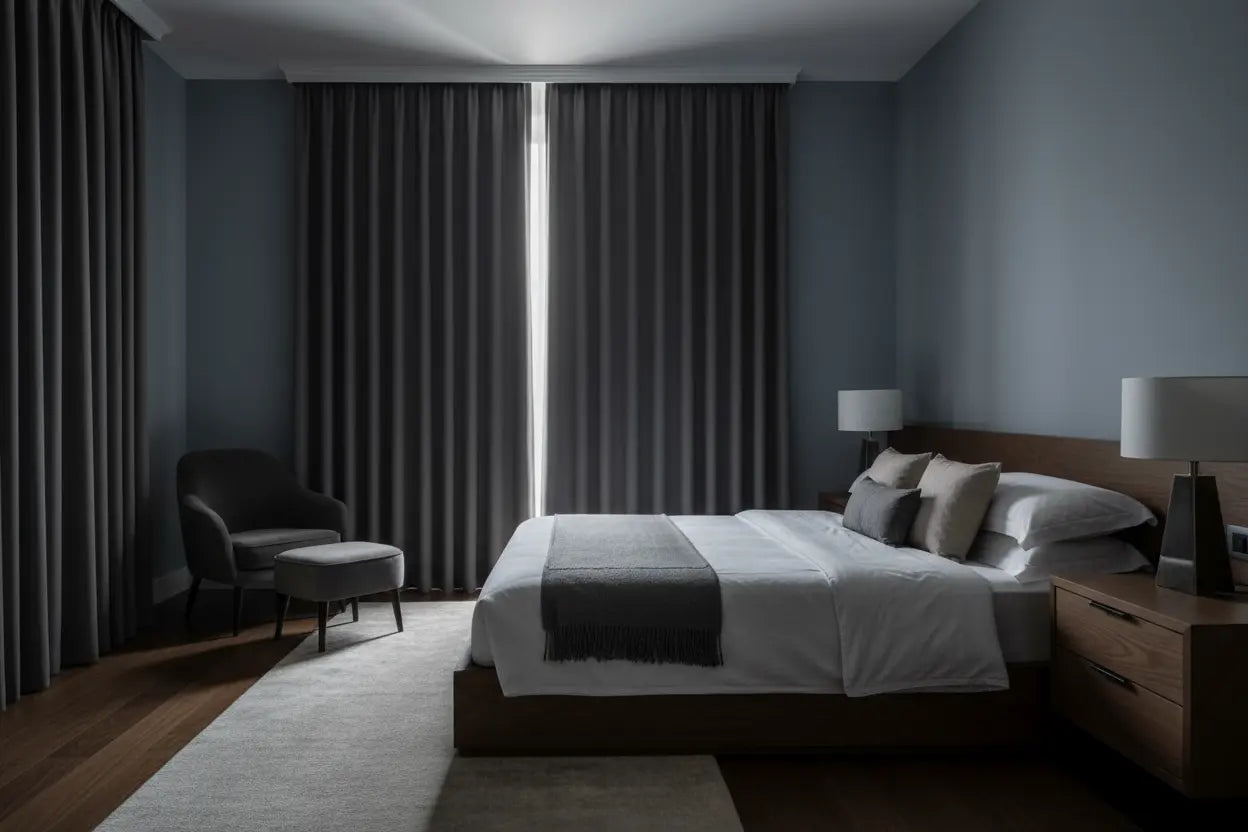
In today's fast-paced world, homeowners are increasingly seeking ways to simplify daily routines while enhancing comfort, security, and energy efficiency. Motorized blinds have emerged as a transformative solution that combines cutting-edge technology with practical functionality, offering unprecedented control over natural light, privacy, and interior ambiance. Whether you're building a smart home from scratch or upgrading your existing window treatments, understanding the nuances of motorized window coverings can help you make informed decisions that align with your lifestyle and budget.
This comprehensive guide draws on industry expertise, real-world installation experience, and consumer insights to provide you with everything you need to know about motorized shades and blinds. From understanding the core technology to selecting the right style for your space, we'll explore how these innovative window treatments can elevate your home's functionality and aesthetic appeal.
What are Motorized Blinds and How Do They Work?
Motorized blinds are window coverings equipped with an integrated electric motor that allows you to raise, lower, tilt, or adjust them with the push of a button, voice command, or automated schedule. Unlike traditional manual blinds that require physical effort to operate—often involving cords, chains, or wands—motorized systems provide effortless control through various mechanisms including remote controls, smartphone apps, wall switches, or integration with smart home ecosystems.
The fundamental appeal of motorization lies in its ability to eliminate the hassle of adjusting multiple window treatments throughout your home. Imagine waking up to gently rising shades that welcome the morning sun, or arriving home to find your blinds already closed for privacy—all without lifting a finger. This level of convenience is particularly valuable for hard-to-reach windows, large or heavy window treatments, and homes with numerous windows that would otherwise require significant time and effort to manage manually.
Understanding Motorization vs. Automation
While the terms "motorized" and "automated" are often used interchangeably, there's an important distinction worth noting. Motorization refers specifically to the addition of an electric motor to a window treatment, enabling remote or app-based control. You can operate motorized blinds whenever you choose, but the action still requires your input—whether that's pressing a button on a remote, tapping your smartphone screen, or issuing a voice command.
Automation, on the other hand, takes motorization a step further by incorporating programmable schedules, sensors, and smart home integration. Automated blinds can adjust themselves based on predetermined criteria such as time of day, sunlight intensity, room temperature, or even your location (using geofencing technology). For example, you might program your motorized shades to close automatically when the afternoon sun creates glare on your television screen, or to open gradually at sunrise to serve as a natural alarm clock.
The distinction matters because it affects both the initial investment and the long-term value you'll derive from your window treatments. Basic motorization offers convenience and accessibility, while full automation provides a truly hands-free experience that can contribute to energy savings, enhanced security, and seamless integration with your broader smart home ecosystem.
Key Components of a Motorized Window System
Understanding the core components of a motorized blind system helps demystify the technology and enables you to make more informed purchasing decisions. Every motorized window treatment consists of several essential elements working in harmony:
The Motor Unit: This is the heart of the system—a compact electric motor typically housed within the headrail or roller tube of the blind. Modern motors are remarkably quiet, with premium models producing minimal noise during operation (often less than 40 decibels, comparable to a whisper). Motors vary in strength based on the size and weight of the window treatment they need to lift, with torque ratings typically ranging from 1.5 to 3.0 Newton-meters for residential applications.
Power Source: Motorized blinds can be powered through several methods, each with distinct advantages. Battery-powered systems offer the greatest installation flexibility since they don't require proximity to electrical outlets or hardwiring. Rechargeable lithium-ion batteries have become increasingly popular, with some models lasting 6-12 months on a single charge depending on usage frequency. Plug-in systems provide continuous power without battery maintenance but require access to an outlet. Hardwired installations offer the most permanent solution, ideal for new construction or major renovations. Solar-powered options harness natural light to recharge batteries, representing an eco-friendly alternative that's particularly effective for south-facing windows.
Control Interface: This is how you communicate with your motorized blinds. Options include handheld remote controls (often using radio frequency or infrared signals), wall-mounted switches that mimic traditional light switches, smartphone applications that connect via Wi-Fi or Bluetooth, and voice control through smart assistants like Amazon Alexa, Google Assistant, or Apple Siri. Many systems support multiple control methods simultaneously, providing flexibility for different users and situations.
The Blind or Shade Itself: The actual window covering material—whether it's Roman shades, roller shades, cellular shades, or traditional horizontal blinds—is designed to integrate seamlessly with the motorized mechanism. The fabric or material choice affects both the aesthetic and functional performance, including light control, insulation properties, and privacy levels.
Smart Hub or Bridge (Optional): For advanced automation and smart home integration, some systems require a central hub that connects your motorized blinds to your home's Wi-Fi network and enables communication with other smart devices. This component is essential for features like scheduling, remote access when you're away from home, and integration with platforms like Apple HomeKit, Samsung SmartThings, or IFTTT (If This Then That) automation recipes.
The Difference Between Smart Blinds and Motorized Blinds
The marketplace often uses "smart blinds" and "motorized blinds" as synonymous terms, but there's a meaningful distinction that can impact your purchasing decision and user experience. All smart blinds are motorized, but not all motorized blinds are smart.
Motorized blinds in their most basic form simply add electric operation to traditional window treatments. You gain the convenience of remote control and eliminate manual operation, but the system operates in isolation without connectivity to other devices or the internet. These standalone motorized systems are typically more affordable and simpler to install, making them an excellent entry point for homeowners new to automated window treatments.
Smart blinds, conversely, incorporate connectivity features that enable integration with your broader smart home ecosystem. They connect to your home's Wi-Fi network, allowing you to control them from anywhere in the world via smartphone app. Smart blinds can be programmed with sophisticated schedules, respond to voice commands through virtual assistants, and interact with other smart devices in your home. For instance, you might create an automation where your smart blinds close automatically when your smart thermostat detects the room temperature rising above a certain threshold, helping to reduce cooling costs.
The smart functionality also enables features like:
- Geofencing: Blinds that automatically adjust when you leave or arrive home based on your smartphone's location
- Sunrise/sunset tracking: Automatic adjustment based on actual sunrise and sunset times in your location, which change throughout the year
- Integration with security systems: Blinds that close when your security system is armed or open when motion is detected (to create the appearance of occupancy when you're away)
- Scene creation: Preset configurations that adjust multiple window treatments simultaneously to create specific ambiances (movie mode, dinner party, bedtime, etc.)
- Usage analytics: Some premium systems track operation patterns and provide insights into energy savings or suggest optimization opportunities
When evaluating options, consider whether you want simple motorized convenience or the full suite of smart features. Your decision should factor in your comfort level with technology, your existing smart home infrastructure, and whether you value the advanced automation capabilities enough to justify the additional cost.
Key Benefits of Motorized Window Treatments
The growing popularity of motorized blinds and shades isn't merely a trend driven by technological novelty—it reflects genuine, tangible benefits that enhance daily life in meaningful ways. Homeowners who invest in motorized window treatments consistently report high satisfaction levels, citing improvements in convenience, comfort, security, and even property value. Let's explore the primary advantages that make motorized blinds a worthwhile consideration for modern homes.
Enhanced Convenience and Remote Control
The most immediately apparent benefit of motorized window treatments is the sheer convenience they provide. Consider the typical morning routine in a home with multiple windows: walking from room to room, adjusting each blind or shade to the desired position, dealing with tangled cords or stuck mechanisms. Now imagine accomplishing the same task from your bed with a single button press or voice command. This time-saving convenience compounds throughout the day as lighting needs change.
For homes with hard-to-reach windows—such as skylights, cathedral ceilings, windows above staircases, or those blocked by furniture—motorization transforms previously inaccessible window treatments into easily manageable elements of your home. No more climbing ladders, stretching dangerously, or simply leaving certain windows perpetually covered because adjustment is too difficult. Motorized Roman shades are particularly popular for these challenging installations, combining elegant aesthetics with effortless operation.

The convenience extends beyond individual operation to synchronized control of multiple window treatments. Modern systems allow you to group blinds by room, floor, or function, then control entire groups simultaneously. Preparing your home for a dinner party becomes as simple as activating your "entertaining" scene, which might open dining room shades to showcase sunset views while closing living room blinds to reduce glare on the television. This level of coordinated control would be impractical with manual window treatments.

For individuals with mobility challenges, arthritis, or other physical limitations, motorized blinds aren't just convenient—they're transformative. They restore independence and control over one's environment, eliminating the physical strain and dexterity required to operate traditional window treatments. This accessibility benefit makes motorized systems particularly valuable in aging-in-place scenarios, where modifications that support continued independent living are prioritized.
Improved Home Security and Privacy
Motorized window treatments contribute significantly to home security through several mechanisms. The most straightforward is the ability to control your blinds remotely when you're away from home. Vacation mode features allow you to program your shades to open and close on varied schedules, creating the appearance of occupancy that deters potential intruders. This "lived-in look" is far more convincing than leaving all blinds in a static position, which can signal an empty home to observant criminals.
The privacy benefits extend beyond security concerns to everyday comfort. With motorized blinds, you can instantly adjust privacy levels as circumstances change throughout the day. When neighbors are in their yard, a quick button press closes your shades. When they go inside, you can reopen them to enjoy natural light and views. This dynamic privacy control is particularly valuable in urban or suburban settings where homes are close together.
Scheduled automation enhances both security and privacy by ensuring your window treatments adjust appropriately even when you forget. Program your bedroom shades to close automatically at sunset, guaranteeing privacy during evening hours without requiring you to remember to close them manually. Similarly, schedule them to open at sunrise, allowing natural light to wake you gently while maintaining privacy during nighttime hours.
Energy Efficiency and Temperature Regulation
One of the most compelling yet often underappreciated benefits of motorized shades is their contribution to energy efficiency and climate control. Windows represent one of the primary sources of heat gain in summer and heat loss in winter, and strategic use of window treatments can significantly reduce HVAC costs while improving comfort.
Cellular shades (also called honeycomb shades) are particularly effective for insulation due to their unique construction featuring air pockets that trap heat. When motorized, these shades can be programmed to close automatically during the hottest part of summer afternoons, blocking solar heat gain before it warms your interior spaces. Similarly, they can close at night during winter months to prevent heat from escaping through windows. Our custom blackout honeycomb shades combine superior insulation properties with complete light control, making them ideal for bedrooms and media rooms.
The energy-saving potential increases dramatically when motorized blinds are integrated with smart thermostats or home automation systems. Imagine a scenario where your blinds automatically close when your thermostat detects the air conditioning running during peak afternoon heat, reducing solar heat gain and allowing your HVAC system to work more efficiently. Studies have shown that properly deployed automated window treatments can reduce heating and cooling costs by 15-25%, with the exact savings depending on climate, window orientation, and shade type.
Solar shades and roller shades with varying opacity levels allow you to fine-tune the balance between natural light and heat control. Light-filtering fabrics reduce glare and heat while maintaining views and ambient light, whereas blackout materials provide maximum temperature control and darkness. The ability to adjust these shades precisely throughout the day—automatically responding to changing sun angles and intensity—optimizes both comfort and efficiency in ways that manual operation simply cannot match.
Beyond direct energy savings, motorized blinds contribute to sustainable living by reducing reliance on artificial lighting. Automated schedules that open shades during daylight hours maximize natural illumination, reducing electricity consumption for lighting. Some advanced systems even include light sensors that adjust shade positions to maintain consistent interior lighting levels, opening further when clouds pass and closing slightly when direct sunlight becomes too intense.

Child and Pet Safety with Cordless Designs
Window covering cords have long been recognized as a serious safety hazard, particularly for young children and pets. The U.S. Consumer Product Safety Commission reports that corded window coverings are among the top five hidden hazards in American homes, with tragic incidents occurring when children become entangled in loops or cords. Motorized blinds eliminate this risk entirely by removing cords from the equation.

The cordless design inherent to motorized systems provides peace of mind for parents and pet owners. There are no dangling cords for curious toddlers to pull on or wrap around their necks, no chains for cats to bat at and potentially become tangled in, and no wands that could be used inappropriately. This safety benefit alone justifies the investment for many families with young children.
Beyond eliminating strangulation hazards, cordless motorized blinds also prevent other common accidents associated with traditional window treatments. Children can't yank on cords and pull entire blinds down on themselves, and there's no risk of cords fraying and breaking, causing blinds to fall unexpectedly. The robust mounting and controlled operation of motorized systems ensure stable, predictable performance that won't surprise or endanger household members.
For households with pets, particularly cats who are notorious for their fascination with dangling cords, motorized blinds eliminate a common source of mischief and potential harm. No more tangled cords, damaged blinds from playful batting, or worried pet owners wondering if their curious cat might hurt themselves while you're away at work.
The safety advantages extend to elderly household members as well. Motorized operation eliminates the need to reach, stretch, or exert force to operate window treatments—movements that could lead to falls or strain injuries in older adults. The simple button-press or voice-command operation is accessible to individuals with varying levels of physical capability.
Popular Types of Motorized Blinds and Shades
The versatility of motorization technology means it can be applied to virtually any style of window treatment, from sleek modern roller shades to classic Roman shades and traditional horizontal blinds. Understanding the characteristics, benefits, and ideal applications of different motorized blind types helps you select options that align with your aesthetic preferences, functional requirements, and budget. Let's explore the most popular categories of motorized window treatments available today.
Motorized Roller and Solar Shades
Roller shades represent one of the most popular and versatile options for motorization, combining clean, contemporary aesthetics with exceptional functionality. These shades consist of a single piece of fabric that rolls up into a cassette or around a tube when raised, creating a streamlined appearance that complements modern interior design. When motorized, roller shades offer whisper-quiet operation and precise positioning control, allowing you to adjust them to any height with millimeter accuracy.

The fabric options for roller shades span an impressive range, from sheer materials that filter light while maintaining views, to room-darkening fabrics that provide privacy and light control, to complete blackout materials that eliminate virtually all light transmission. This versatility makes roller shades suitable for any room in your home. Our custom blackout roller shades are particularly popular for bedrooms, nurseries, and home theaters where complete darkness is desired.
Solar shades are a specialized category of roller shades designed specifically to reduce solar heat gain and glare while preserving outward views. They're constructed from specially engineered fabrics with varying openness factors (typically ranging from 1% to 14%), which determine how much light passes through. A 1% openness fabric blocks 99% of UV rays and significantly reduces heat and glare, while a 14% openness fabric provides more ambient light and clearer views while still offering substantial sun protection.
The motorization of solar shades is particularly valuable because optimal positioning changes throughout the day as the sun moves across the sky. Automated solar shades can track the sun's position, adjusting to block direct sunlight while remaining open enough to maintain views and natural light. This dynamic response maximizes comfort and energy efficiency without requiring constant manual adjustment.
Installation considerations for motorized roller shades are relatively straightforward, making them an excellent choice for both new construction and retrofit applications. The motor housing fits neatly within the roller tube, creating a clean, integrated appearance. Battery-powered options eliminate the need for electrical wiring, while hardwired installations provide permanent power for larger or frequently operated shades.

Cellular and Honeycomb Shades
Cellular shades, also known as honeycomb shades due to their distinctive cell structure, are engineered specifically for energy efficiency and insulation. Their unique construction features hexagonal cells that trap air, creating an insulating barrier between your window and interior space. This design makes cellular shades among the most energy-efficient window treatment options available, with some models achieving R-values (thermal resistance) comparable to insulated walls.
When motorized, cellular shades become even more effective at managing your home's thermal envelope. Automated operation allows you to program shades to close during the hottest afternoon hours in summer, blocking solar heat before it enters your home, and to close at night during winter months, preventing heat from escaping through windows. This automated thermal management can significantly reduce HVAC costs while maintaining consistent comfort levels throughout your home.
Cellular shades are available in single-cell and double-cell configurations, with double-cell designs providing superior insulation due to their additional air pockets. They also come in various cell sizes, typically ranging from 3/8" to 2", with larger cells offering better insulation and a bolder visual statement, while smaller cells provide a more refined, tailored appearance suitable for smaller windows.
The light control options for cellular shades range from sheer fabrics that gently filter light while providing daytime privacy, to light-filtering materials that reduce glare while maintaining soft ambient light, to room-darkening and blackout fabrics that provide complete light control. The cellular shades collection offers various opacity levels to suit different room requirements and personal preferences.
Motorization benefits for cellular shades are particularly pronounced for large windows or sliding glass doors, where the shades can become heavy and difficult to operate manually. The smooth, controlled motorized operation prevents the sagging or uneven raising that can occur with manual operation of large cellular shades, maintaining their crisp appearance and extending their lifespan.

One consideration specific to motorized cellular shades is the top-down/bottom-up functionality that many homeowners value. This feature allows you to lower the shade from the top or raise it from the bottom independently, providing privacy while still allowing natural light through upper windows. While this functionality is available in motorized versions, it typically requires a more sophisticated (and expensive) dual-motor system compared to standard single-direction operation.

Wood and Faux Wood Blinds
Wood blinds bring timeless elegance and natural warmth to any interior space, and when equipped with motorization, they combine classic aesthetics with modern convenience. Traditional wood blinds—crafted from premium hardwoods like basswood, oak, or bamboo—offer rich grain patterns and authentic texture that complement both traditional and contemporary design schemes. However, their weight can make manual operation challenging, particularly for larger windows or wide expanses of glass. Motorization solves this problem elegantly, providing effortless control of even the heaviest wood blinds.
Faux wood blinds (also called composite or synthetic wood blinds) offer a compelling alternative that mimics the appearance of real wood while providing enhanced durability and moisture resistance. Constructed from PVC, vinyl, or composite materials, faux wood blinds are ideal for high-humidity environments like bathrooms, kitchens, and coastal homes where real wood might warp or deteriorate. They're also significantly lighter than genuine wood, which can reduce the motor power requirements and extend battery life in battery-powered motorized systems.
The motorization of wood and faux wood blinds typically involves integrating the motor into the headrail, with the tilting mechanism controlled electronically to adjust slat angles for precise light control. You can program these blinds to tilt to specific angles throughout the day—perhaps partially open in the morning to allow soft light while maintaining privacy, fully open at midday for maximum illumination, and closed in the evening for complete privacy.
Aesthetic considerations for motorized wood blinds include slat width (typically ranging from 1" to 2.5"), finish options (stained, painted, or natural), and decorative tapes or cloth tapes that can add visual interest while concealing the ladder cords. The absence of operating cords in motorized versions creates an exceptionally clean, uncluttered appearance that showcases the natural beauty of the wood or the refined finish of faux wood materials.
One practical advantage of motorized wood blinds is the elimination of cord wear and tangling, common issues with manual wood blinds that can lead to uneven slat alignment or operational failures over time. The motorized tilting mechanism ensures consistent, smooth operation that maintains the blinds' appearance and functionality for years. This reliability is particularly valuable for wood blinds, which represent a significant investment and are expected to last for decades.
Installation requirements for motorized wood blinds are similar to other motorized treatments, though the additional weight of wood materials may necessitate more robust mounting hardware. Battery-powered systems work well for standard-sized windows, while hardwired or plug-in options are often preferred for larger installations or multiple blinds that operate frequently throughout the day.
Roman and Woven Wood Shades
Roman shades epitomize sophisticated elegance, featuring fabric that folds into neat horizontal pleats when raised and lies flat when lowered. This classic window treatment style has been beloved for centuries, and motorization elevates Roman shades from beautiful to truly luxurious. The smooth, controlled raising and lowering provided by motorized operation showcases the graceful folding action of Roman shades while eliminating the physical effort required to operate them manually—particularly important for larger windows where Roman shades can become quite heavy.
The fabric options for Roman shades are virtually limitless, ranging from sheer and semi-sheer materials that filter light delicately, to medium-weight fabrics that provide privacy and moderate light control, to lined or blackout versions that offer complete darkness and superior insulation. Our custom 100% blackout motorized Roman shades combine the elegant aesthetic of traditional Roman shades with modern motorization and complete light blocking capability, making them ideal for bedrooms where darkness is essential for quality sleep.

Fold styles for Roman shades include flat Roman (smooth, tailored appearance), hobbled Roman (soft, cascading folds even when lowered), relaxed Roman (gentle curved bottom), and balloon Roman (voluminous, gathered appearance). Each style creates a distinct visual effect, and motorization works seamlessly with all fold types. The choice depends on your interior design aesthetic and the level of formality desired for the space.
Woven wood shades (also called bamboo shades or natural shades) bring organic texture and earthy warmth to interiors through materials like bamboo, jute, reed, and grasses. These eco-friendly window treatments filter light beautifully, creating warm, dappled illumination that enhances the ambiance of living spaces, dining rooms, and bedrooms. The natural variations in color and texture make each woven wood shade unique, adding artisanal character to your windows.

Motorization is particularly beneficial for woven wood shades because these natural materials can be heavy and sometimes difficult to raise smoothly by hand. The consistent, controlled operation of motorized systems prevents the catching or uneven raising that can occur with manual operation, protecting the integrity of the natural fibers and extending the shade's lifespan. The bamboo shades collection showcases various weave patterns and material options suitable for motorization.
Lining options for both Roman and woven wood shades significantly impact their functionality. Unlined shades provide maximum light filtering and showcase the beauty of the fabric or natural materials, but offer limited privacy and insulation. Privacy linings add opacity without completely blocking light, while blackout linings provide complete light control and enhanced energy efficiency. Thermal linings add an additional layer of insulation, making these shades effective at reducing heat transfer through windows.
The motorization mechanism for Roman and woven wood shades typically uses a cord-and-pulley system integrated with the motor, which raises and lowers the shade smoothly while maintaining even tension across the width. This ensures the characteristic horizontal folds form consistently and the shade hangs properly at any position. Premium motorized systems include soft-start and soft-stop features that prevent jerky movements and extend the life of both the motor and the shade fabric.

Smart Home Integration and Control Options
The true power of motorized blinds is fully realized when they're integrated into your broader smart home ecosystem. Modern motorized window treatments offer multiple control methods and integration possibilities, allowing you to choose the approach that best fits your lifestyle, technical comfort level, and existing smart home infrastructure. Understanding these options helps you maximize the value and functionality of your investment.
Voice Control via Alexa, Google Home, and Siri
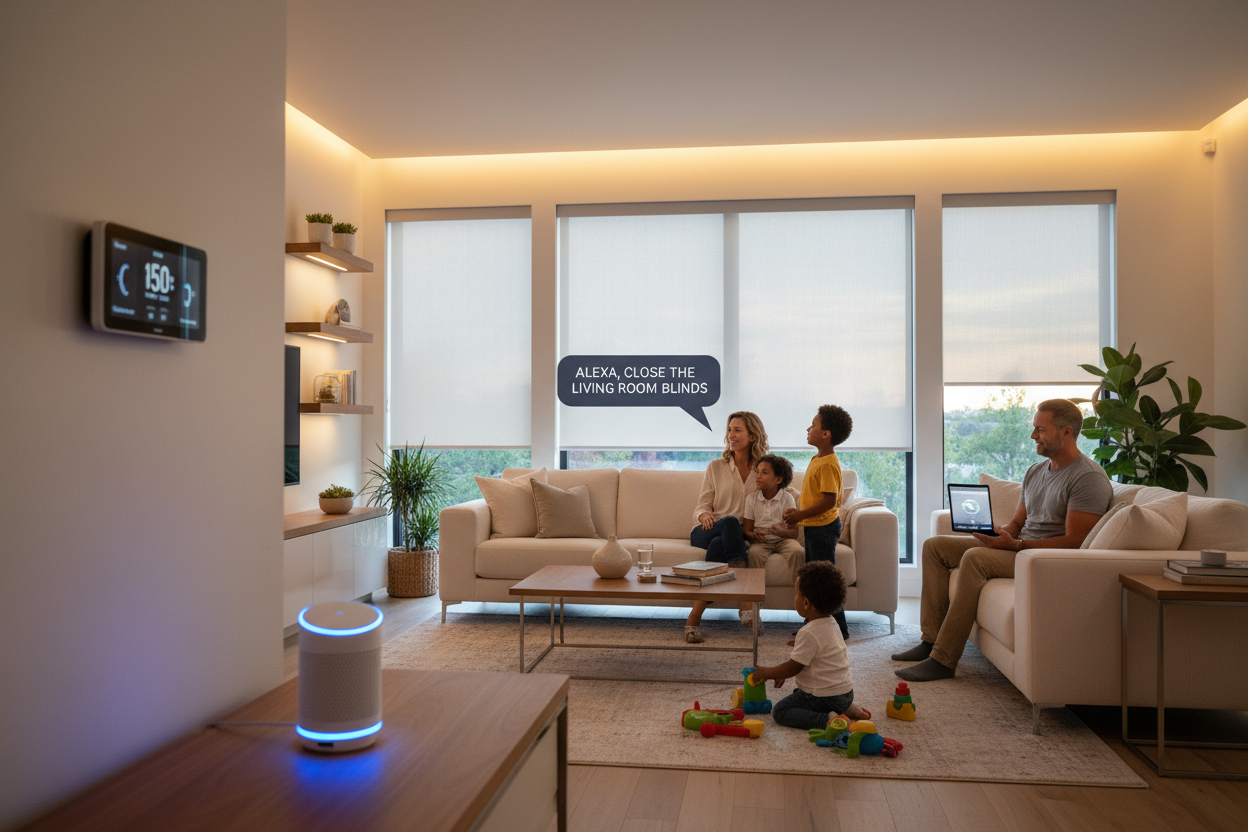
Voice control represents one of the most intuitive and accessible ways to operate motorized blinds, particularly for individuals with mobility limitations or those whose hands are occupied with other tasks. Simply speaking a command like "Alexa, close the living room blinds" or "Hey Google, open the bedroom shades to 50%" triggers immediate action without requiring you to locate a remote, pull out your phone, or walk to a wall switch.
The three major voice assistant platforms—Amazon Alexa, Google Assistant, and Apple Siri—each offer robust support for motorized window treatments, though the specific setup process and command syntax vary slightly between platforms. Most quality motorized blind manufacturers provide native integration with these platforms or work through intermediary smart home hubs that bridge the connection.

Amazon Alexa integration typically involves enabling a skill for your specific blind manufacturer, then discovering devices through the Alexa app. Once configured, you can control individual blinds, groups of blinds, or include blind operation in Alexa routines. For example, you might create a "Good Morning" routine that gradually opens your bedroom shades, turns on your coffee maker, and reads the day's weather forecast—all triggered by a single voice command or automatically at a scheduled time.
Google Assistant offers similar functionality through the Google Home app, with the added benefit of Google's advanced natural language processing. You can use more conversational commands like "Hey Google, make it darker in here" and the system will intelligently close nearby blinds to the appropriate level. Google's routine functionality allows you to combine blind control with other smart home actions, creating sophisticated automation scenarios.
Apple Siri and HomeKit integration provides seamless control for users invested in the Apple ecosystem. HomeKit's emphasis on privacy and local processing means your blind control commands are handled securely, and the Home app provides an elegant interface for managing all your HomeKit-compatible devices. Siri Shortcuts enable complex automation sequences that can include blind operation alongside other HomeKit devices.
Voice control considerations include ensuring your motorized blinds are within range of your voice assistant devices (or connected via Wi-Fi for cloud-based control), creating intuitive names for individual blinds and groups that are easy to remember and pronounce, and understanding the specific command syntax each platform prefers. Most systems allow you to customize device names, so you might name blinds by room ("bedroom blinds"), location ("east window"), or function ("privacy shades") depending on what feels most natural to you.
One practical tip: when setting up voice control for multiple blinds, create logical groups that match how you think about your spaces. Rather than controlling each of six living room windows individually, group them as "living room blinds" for unified control, while still maintaining the ability to address individual blinds when needed.
Mobile App Control and Custom Scheduling
Smartphone apps provide the most comprehensive control interface for motorized blinds, offering features that go far beyond simple raise and lower commands. Manufacturer-specific apps typically include visual representations of your home's windows, allowing you to see at a glance which blinds are open or closed and adjust them individually or in groups with intuitive touch controls.
The scheduling capabilities available through mobile apps are particularly powerful. You can create detailed schedules that adjust your blinds automatically based on time of day, day of week, or even sunrise and sunset times (which the app calculates based on your location and adjusts throughout the year as daylight hours change). For example, you might schedule your east-facing bedroom shades to close at sunrise during summer months when early morning sun would otherwise wake you too early, but leave them open during winter when you welcome the morning light.
Scene creation is another valuable app feature that allows you to save specific blind configurations for different activities or times of day. A "Movie Night" scene might close all living room blinds completely while leaving kitchen blinds partially open for ambient light. A "Dinner Party" scene might adjust dining room shades to reduce glare while opening living room blinds to showcase evening views. Once created, these scenes can be activated with a single tap, voice command, or automatically based on triggers you define.
Remote access capabilities mean you can control your blinds from anywhere in the world with an internet connection. Forgot to close your blinds before leaving for vacation? Open the app and close them remotely. Want to open blinds before you arrive home so your house is filled with natural light when you walk in? Trigger that action from your car or office. This remote capability also enables you to respond to changing weather conditions—closing blinds when you receive a severe weather alert, for example.
Geofencing is an advanced feature offered by some motorized blind systems that uses your smartphone's location to trigger automatic actions. You can configure your blinds to close automatically when you leave home (ensuring privacy and energy efficiency) and open when you return (welcoming you with natural light). The geofence radius is typically adjustable, allowing you to fine-tune when these actions occur.
Integration with other smart home devices through apps like IFTTT (If This Then That), SmartThings, or Home Assistant enables sophisticated automation scenarios. You might create an applet that closes your blinds automatically when your smart thermostat detects the indoor temperature rising above a certain threshold, or one that opens blinds when your security system is disarmed in the morning. These integrations transform your motorized blinds from standalone devices into active participants in your home's intelligent ecosystem.
App-based troubleshooting and maintenance features help you monitor battery levels, check motor status, and receive notifications when maintenance is needed. Some premium systems provide usage statistics showing how often each blind operates, which can help you optimize schedules and identify opportunities for energy savings.
Handheld Remotes and Wall Switches
While smartphone apps and voice control represent the cutting edge of motorized blind operation, handheld remotes and wall switches remain popular control methods that offer simplicity, reliability, and universal accessibility. These physical control options don't require smartphones, internet connectivity, or familiarity with apps, making them ideal for guests, children, elderly family members, or anyone who prefers tactile controls.
Handheld remote controls typically use radio frequency (RF) signals to communicate with motorized blinds, offering reliable operation from anywhere in the room without requiring line-of-sight (unlike older infrared remotes). Modern remotes are sleek, compact devices that can control individual blinds or groups, with some models featuring multi-channel capability that allows a single remote to operate blinds in different rooms or zones.
Remote control features vary by manufacturer and model, but commonly include:
- Individual blind control: Dedicated buttons for specific windows or blinds
- Group control: Single-button operation of multiple blinds simultaneously
- Preset positions: Programmable buttons that move blinds to favorite positions (25%, 50%, 75% open, etc.)
- Tilt control: For blinds with adjustable slats, separate buttons to control tilt angle
- Stop function: Ability to halt blind movement at any position
- Battery indicators: Visual alerts when remote batteries need replacement
Wall switches provide a permanent, intuitive control option that mimics traditional light switches. They're typically installed near doorways or in convenient locations, offering one-touch control without the need to locate a remote or phone. Wall switches can be battery-powered (requiring no electrical wiring) or hardwired into your home's electrical system for permanent installation.
The aesthetic appeal of wall switches has improved dramatically in recent years, with many manufacturers offering sleek, modern designs that complement contemporary interiors. Some models feature customizable button layouts, backlit controls for visibility in dark rooms, and even small displays showing blind status or battery levels.
Multi-channel wall switches can control different blinds or groups from a single switch panel, reducing wall clutter while providing comprehensive control. For example, a three-button switch might control bedroom blinds, bathroom blinds, and a "close all" function for bedtime. This centralized control is particularly convenient in bedrooms, where you can adjust all window treatments without getting out of bed.
Timer functionality built into some wall switches allows you to set automatic operation schedules without requiring app configuration or smart home integration. While less flexible than app-based scheduling, this feature provides basic automation for users who prefer simple, standalone operation.
One advantage of physical controls is their reliability and independence from network connectivity. When your Wi-Fi is down or your smartphone battery is dead, remotes and wall switches continue to function normally. This redundancy ensures you always have control over your window treatments regardless of technical issues affecting other control methods.

Integration with Smart Home Hubs
For homeowners committed to comprehensive home automation, integrating motorized blinds with a smart home hub unlocks the full potential of intelligent window treatment control. Smart home hubs—such as Samsung SmartThings, Hubitat Elevation, Home Assistant, or Apple HomePod (for HomeKit)—serve as central command centers that coordinate communication between various smart devices, enabling sophisticated automation scenarios that would be impossible with standalone systems.
Hub-based integration allows your motorized blinds to interact with other smart home devices in meaningful ways. For example, you might create an automation where your blinds close automatically when your smart door lock is engaged and your security system arms, then open gradually in the morning when your smart alarm clock goes off. These multi-device routines create a truly intelligent home environment that responds to your lifestyle patterns.
Popular integration scenarios include:
- Climate control optimization: Blinds that work with smart thermostats to reduce heating and cooling costs by closing during peak temperature hours
- Lighting coordination: Blinds that adjust based on smart light sensor readings to maintain consistent interior lighting levels
- Security enhancement: Blinds that close when security cameras detect motion or open when smoke detectors activate (providing firefighters visibility into your home)
- Entertainment integration: Blinds that close automatically when your smart TV or projector turns on, creating optimal viewing conditions
- Circadian rhythm support: Blinds that adjust throughout the day to support natural sleep-wake cycles by maximizing morning light exposure and minimizing evening blue light
Protocol compatibility is an important consideration when selecting motorized blinds for hub integration. Common smart home protocols include:
- Zigbee: Low-power wireless protocol popular for battery-operated devices, offering good range and mesh networking capabilities
- Z-Wave: Another low-power protocol with excellent reliability and strong mesh networking, though less common than Zigbee
- Wi-Fi: Direct connection to your home network, offering broad compatibility but higher power consumption
- Thread: Emerging protocol designed specifically for smart home devices, offering low power consumption and robust mesh networking
- Proprietary protocols: Some manufacturers use their own communication protocols, requiring their specific hub or bridge device

Hub selection should consider which protocols your motorized blinds support, what other smart home devices you own or plan to purchase, and your technical comfort level with configuration and troubleshooting. Some hubs offer user-friendly interfaces suitable for beginners, while others provide advanced customization options that appeal to tech enthusiasts willing to invest time in detailed configuration.
Cloud vs. local processing is another consideration. Cloud-based systems process automation rules on manufacturer servers, requiring internet connectivity but offering easy setup and remote access. Local processing hubs execute automation rules on the hub itself, providing faster response times, better privacy, and continued operation during internet outages, but may require more technical setup.

Power Source Options for Motorized Blinds
Selecting the appropriate power source for your motorized blinds significantly impacts installation complexity, ongoing maintenance requirements, and long-term operating costs. Each power option offers distinct advantages and trade-offs, and the best choice depends on factors including window location, usage frequency, aesthetic preferences, and whether you're installing blinds in new construction or retrofitting existing windows.
Battery-Powered and Rechargeable Motors
Battery-powered motorized blinds have become increasingly popular due to their installation flexibility and wire-free aesthetic. These systems use either disposable batteries (typically AA or D-cell) or rechargeable lithium-ion battery packs housed within the blind's headrail or roller tube. The absence of electrical wiring means battery-powered blinds can be installed on any window regardless of proximity to electrical outlets, making them ideal for retrofit applications where running new wiring would be impractical or expensive.
Battery life varies considerably based on several factors including motor efficiency, blind size and weight, operation frequency, and battery capacity. Modern lithium-ion rechargeable systems typically provide 6-12 months of operation on a single charge under normal usage patterns (defined as 2-4 operations per day). Larger or heavier blinds require more powerful motors that consume batteries faster, while smaller, lighter shades can achieve even longer battery life.
Disposable battery systems using AA or D-cell batteries offer the convenience of easy replacement without requiring charging infrastructure. When batteries run low, you simply swap in fresh ones—a process that typically takes just a few minutes. However, the ongoing cost of replacement batteries and environmental impact of disposable batteries are considerations. High-quality alkaline batteries in an efficient motor system might last 12-18 months, while lower-quality batteries or frequent operation can reduce this to 6-9 months.

Rechargeable battery systems eliminate the need for battery purchases and reduce environmental waste. Most use USB charging (similar to smartphone charging), with some premium systems offering wireless charging capabilities. The charging process typically takes 2-4 hours for a full charge, and many systems provide low-battery warnings through the control app, giving you ample time to recharge before the battery is completely depleted.
Solar-powered charging represents an innovative hybrid approach that combines battery power with renewable energy. Small solar panels mounted on or near the window capture sunlight and continuously trickle-charge the battery, potentially eliminating the need for manual charging altogether. This solution is particularly effective for south-facing windows that receive abundant sunlight, though it may be less practical for north-facing windows or heavily shaded locations.
Maintenance considerations for battery-powered systems include monitoring battery levels (either through app notifications or visual indicators on the blind), keeping spare batteries on hand for disposable systems, or establishing a charging routine for rechargeable systems. Some homeowners prefer to recharge all their motorized blinds annually during a specific season (such as when changing clocks for daylight saving time) to maintain a simple, predictable maintenance schedule.
Aesthetic advantages of battery power include the complete absence of visible wires, creating an exceptionally clean, minimalist appearance. There are no cords to hide, no outlets to position furniture around, and no concerns about wire management. This wire-free design is particularly appealing in modern, minimalist interiors where visual clutter is minimized.
Plug-In and Hardwired Electrical Systems
Plug-in motorized blinds offer a middle ground between battery power and permanent hardwiring, providing continuous electrical power without requiring professional electrical work. These systems include a power adapter that plugs into a standard electrical outlet, with a low-voltage wire running to the blind motor. The wire can often be concealed along window frames, baseboards, or behind furniture, creating a relatively clean appearance while ensuring the motor never runs out of power.
Advantages of plug-in systems include:
- Unlimited operation: No battery charging or replacement required, enabling frequent operation without power concerns
- Consistent performance: Electrical power provides stronger, more consistent motor operation compared to batteries that weaken as they discharge
- Cost efficiency: No ongoing battery costs or charging infrastructure needed
- Reliability: Eliminates the risk of blinds becoming inoperable due to dead batteries
- Ideal for high-use applications: Perfect for blinds that operate multiple times daily, such as those integrated with automated schedules or smart home routines
Installation considerations for plug-in systems include ensuring electrical outlets are available near the windows where blinds will be installed. If outlets aren't conveniently located, you may need to add new outlets (requiring electrical work) or run extension cords (which can create visual clutter and safety hazards). The low-voltage wiring between the adapter and motor is typically thin and flexible, making it easier to conceal than standard electrical wiring, but it still requires thoughtful routing to maintain a clean aesthetic.
Hardwired motorized blinds represent the most permanent and professional installation option, with the motor connected directly to your home's electrical system through in-wall wiring. This approach is most common in new construction or major renovation projects where walls are open and electrical work is already being performed. Hardwired systems eliminate all visible wires and power adapters, creating the cleanest possible appearance.
Professional installation is typically required for hardwired systems, as the work involves running electrical wiring through walls and making connections that must comply with local electrical codes. An electrician will install junction boxes near each window, run appropriate wiring (usually 16-gauge low-voltage wire), and ensure proper grounding and circuit protection. The additional labor and materials increase upfront costs compared to battery or plug-in systems, but many homeowners consider the investment worthwhile for the permanent, maintenance-free operation.
Hardwired advantages include:
- Permanent solution: Once installed, hardwired systems require virtually no maintenance beyond occasional motor servicing
- Maximum power: Direct electrical connection provides ample power for even the largest, heaviest window treatments
- Clean aesthetics: Complete absence of visible wires, adapters, or battery compartments
- Increased home value: Professional motorized blind installation is considered a premium feature that can enhance property value
- Ideal for whole-home installations: When motorizing multiple windows throughout a home, hardwiring creates a cohesive, professional system
Power consumption for motorized blinds is remarkably low regardless of power source. Motors only draw power during actual operation (typically 10-30 seconds per adjustment), consuming negligible electricity even with frequent use. Hardwired and plug-in systems may include a small standby power draw to maintain wireless connectivity, but this is typically less than 1 watt—comparable to a digital clock.
Solar-Powered Energy Solutions
Solar-powered motorized blinds represent the intersection of sustainability, convenience, and innovation, harnessing renewable energy to power window treatments without batteries or electrical connections. These systems integrate small photovoltaic panels that capture ambient light—both natural sunlight and artificial indoor lighting—converting it into electrical energy that charges an internal battery and powers the motor.
How solar power works for motorized blinds: The solar panel (typically measuring 2-4 inches square) mounts on the window frame, headrail, or nearby wall where it can receive adequate light exposure. The panel connects to a rechargeable battery housed within the blind's motor assembly. Throughout the day, the panel continuously trickle-charges the battery, maintaining sufficient power for normal operation. Even on cloudy days or in rooms with limited natural light, the combination of ambient daylight and artificial lighting is often sufficient to keep the battery charged.
Ideal applications for solar-powered motorized blinds include:
- South-facing windows: Receive maximum sunlight exposure, ensuring robust charging even during winter months
- East and west-facing windows: Receive strong morning or afternoon sun, providing ample charging opportunity
- Rooms with consistent artificial lighting: Offices, kitchens, and living spaces where lights are frequently on can supplement natural light for charging
- Eco-conscious installations: Homes prioritizing sustainability and renewable energy solutions
- Remote or off-grid locations: Properties where electrical access is limited or where minimizing electrical consumption is prioritized
Performance considerations include understanding that solar charging effectiveness varies based on geographic location, window orientation, seasonal sunlight variations, and local weather patterns. Homes in sunny climates like the southwestern United States will experience more robust solar charging than those in cloudier regions like the Pacific Northwest. However, modern solar-powered blind systems are engineered to function reliably even in less-than-ideal conditions, with battery reserves sufficient to maintain operation through extended cloudy periods.
Maintenance requirements for solar-powered systems are minimal but important. The solar panel surface should be kept clean to maximize light absorption—dust, dirt, or window film can reduce charging efficiency. A simple wipe with a soft cloth every few months maintains optimal performance. The rechargeable battery will eventually degrade after several years of use (typically 3-5 years), requiring replacement, though this is far less frequent than disposable battery replacement.
Environmental benefits of solar-powered motorized blinds align with broader sustainability goals. By eliminating disposable batteries and reducing electrical consumption, these systems minimize environmental impact while providing the convenience and functionality of motorized operation. For LEED-certified buildings or homes pursuing green building certifications, solar-powered window treatments can contribute to sustainability credits.
Cost considerations position solar-powered systems between battery and hardwired options. Initial costs are typically higher than basic battery-powered blinds due to the integrated solar technology, but lower than hardwired installations that require professional electrical work. The elimination of ongoing battery costs and electrical consumption provides long-term value that can offset the higher upfront investment.

Factors to Consider When Choosing Motorized Blinds
Selecting the right motorized blinds for your home involves evaluating multiple factors that extend beyond simple aesthetic preferences. A thoughtful decision-making process considers functional requirements, technical specifications, budget constraints, and long-term value. This section provides a framework for making informed choices that align with your specific needs and circumstances.
Material, Style, and Opacity Levels
The material and style of your motorized blinds fundamentally determine their appearance, functionality, and suitability for different rooms. Each material category offers distinct characteristics:
Fabric-based treatments (roller shades, Roman shades, cellular shades) provide the widest range of colors, patterns, and textures, allowing precise coordination with your interior design. Fabric options span from sheer and semi-sheer materials that gently filter light while maintaining daytime views, to room-darkening fabrics that significantly reduce light transmission, to complete blackout materials that eliminate virtually all light. The fabric choice should reflect the room's purpose—bedrooms typically benefit from blackout or room-darkening options, while living spaces might prefer light-filtering materials that maintain privacy without sacrificing natural illumination.
Natural materials (woven wood, bamboo, jute) bring organic texture and warmth to interiors, creating a relaxed, spa-like ambiance. These materials filter light beautifully, casting warm, dappled patterns that enhance the room's atmosphere. However, natural materials provide limited privacy when backlit, making them better suited for living areas, dining rooms, and spaces where complete privacy isn't essential, or for use in combination with curtains or other privacy layers.
Hard materials (wood, faux wood, aluminum) offer durability, easy maintenance, and precise light control through adjustable slats. Wood blinds provide classic elegance and natural beauty, while faux wood options deliver similar aesthetics with enhanced moisture resistance and lower cost. Aluminum blinds offer a contemporary look with exceptional durability and affordability.
Opacity levels deserve careful consideration based on room function and privacy requirements:
- Sheer (0-10% opacity): Maximum light transmission, maintains views, provides minimal privacy—suitable for spaces where privacy isn't a concern or where layered with other treatments
- Light-filtering (10-50% opacity): Reduces glare and UV exposure while allowing soft, diffused light—ideal for living rooms, dining rooms, and offices
- Room-darkening (50-95% opacity): Significantly reduces light transmission while allowing some ambient light—appropriate for bedrooms, media rooms, and spaces requiring moderate light control
- Blackout (95-100% opacity): Eliminates virtually all light transmission—essential for bedrooms, nurseries, home theaters, and shift workers requiring daytime sleep
Consider also the direction your windows face when selecting opacity levels. South-facing windows receive intense, direct sunlight throughout the day and may benefit from higher opacity or solar-protective fabrics. North-facing windows receive gentler, indirect light and can often accommodate lighter, more translucent materials. East and west-facing windows experience strong morning or afternoon sun respectively, suggesting room-darkening or blackout options for bedrooms on these orientations.
Window Size and Mounting Requirements
Window dimensions significantly impact motorized blind selection, as larger windows require more powerful motors, sturdier mounting hardware, and potentially different power sources than smaller windows. Understanding the relationship between window size and motorization requirements helps ensure optimal performance and longevity.
Width considerations: Motorized blinds are available in widths ranging from small bathroom windows (as narrow as 12 inches) to expansive walls of glass (up to 20+ feet for some systems). However, extremely wide windows often perform better with multiple narrower blinds rather than a single extra-wide unit. This approach distributes weight more evenly, reduces motor strain, and provides operational redundancy—if one motor fails, the other blinds continue functioning. The specific width limitations vary by blind type and manufacturer, with roller shades typically accommodating wider spans than cellular or Roman shades.
Height considerations: Tall windows increase the weight and surface area of the blind, requiring more powerful motors and potentially different power sources. A floor-to-ceiling window with a blackout roller shade might weigh 20-30 pounds or more, necessitating a robust motor and secure mounting. Battery-powered systems may struggle with very large, heavy blinds, making plug-in or hardwired options more appropriate for these applications.
Mounting options include:
Inside mount: The blind installs within the window frame, creating a clean, built-in appearance that showcases window trim and molding. Inside mounting requires sufficient depth within the window frame to accommodate the blind mechanism (typically 2-3 inches minimum). This mounting style is popular for its streamlined look but may allow light gaps around the edges of the blind
Outside mount: The blind mounts on the wall or window trim above and beyond the window opening, providing maximum light blocking by overlapping the window frame. Outside mounting works for any window regardless of frame depth and allows you to make windows appear larger by extending the blind beyond the actual window dimensions. This approach is often necessary for windows with insufficient inside-mount depth or when maximum light control is prioritized.
Ceiling mount: For some applications, particularly skylights or windows in cathedral ceilings, ceiling mounting provides the only practical installation option. Motorization is especially valuable for ceiling-mounted blinds, as manual operation would be extremely difficult or impossible.
Architectural considerations include window trim style, wall space availability, and potential obstructions like window cranks, handles, or nearby furniture. Measure carefully and consider how the blind will interact with these elements when fully extended. For <a href="/collections/custom-roman-shades">custom Roman shades</a>, account for the stacking height when raised—the fabric folds occupy vertical space that varies based on shade length and fold style.
Brand Reputation and Warranty Coverage
When investing in motorized blinds, the manufacturer's reputation and warranty terms are critical factors that significantly impact long-term satisfaction and value. Unlike manual window treatments where mechanical failures are relatively rare, motorized systems incorporate electronic components, motors, and control systems that require reliable engineering and quality manufacturing to ensure years of trouble-free operation.
Established brands in the motorized window treatment industry have earned their reputations through consistent product quality, responsive customer service, and ongoing innovation. Leading manufacturers invest heavily in research and development, resulting in quieter motors, longer battery life, more intuitive controls, and better smart home integration. While premium brands typically command higher prices, the additional cost often reflects superior materials, more rigorous quality control, and comprehensive support infrastructure.
Key indicators of brand quality include:
Motor reliability and noise levels: Premium motors operate whisper-quiet (under 40 decibels) and provide smooth, consistent performance over hundreds of thousands of cycles. Lower-quality motors may be noticeably louder, operate less smoothly, or fail prematurely. Research customer reviews specifically mentioning motor performance and longevity to gauge real-world reliability.
Control system sophistication: Leading brands offer intuitive apps with robust features, reliable wireless connectivity, and regular software updates that add functionality and address issues. They also provide multiple control options (app, remote, wall switch, voice) and seamless smart home integration. Lesser-known brands may offer limited control options or poorly designed apps that frustrate users.
Customer service responsiveness: When issues arise—whether installation questions, technical troubleshooting, or warranty claims—responsive customer service makes the difference between quick resolution and prolonged frustration. Established brands typically maintain dedicated support teams with extensive product knowledge, while smaller manufacturers may offer limited support hours or slow response times.
Availability of replacement parts: Motors, batteries, and control components eventually wear out or require replacement. Reputable manufacturers maintain parts inventory and provide clear pathways for obtaining replacements, even for products several years old. This long-term parts availability protects your investment and extends the usable life of your motorized blinds.
Warranty coverage varies significantly across manufacturers and should be carefully evaluated before purchase. Comprehensive warranties demonstrate manufacturer confidence in product quality and provide financial protection against defects or premature failures.
Typical warranty components include:
Motor warranty: The most critical coverage, typically ranging from 2-5 years for residential applications, with some premium brands offering lifetime motor warranties. This coverage should include both parts and labor for motor replacement or repair. Verify whether the warranty covers the entire motor assembly or only specific components.
Electronics and controls warranty: Coverage for remotes, wall switches, hubs, and other electronic components, typically 1-3 years. This protection is important given the complexity of modern control systems and the potential for electronic failures.
Fabric or material warranty: Coverage against manufacturing defects in the shade fabric, blind slats, or other materials, usually 1-3 years. This warranty typically excludes normal wear, fading from sun exposure, or damage from improper cleaning, but should cover issues like delamination, seam separation, or material defects.
Installation warranty: Some manufacturers or installers provide separate warranties covering installation workmanship, typically 1 year. This coverage addresses issues like improper mounting, alignment problems, or installation-related damage.
Battery warranty: For battery-powered systems, coverage for the rechargeable battery (typically 1-2 years) protects against premature battery degradation or failure.

Important warranty considerations:
- Registration requirements: Many warranties require product registration within a specified timeframe (often 30-90 days) to activate coverage. Failure to register may void warranty protection.
- Professional installation requirements: Some warranties are only valid if products are professionally installed, not DIY installations. Verify this requirement before purchasing if you plan to self-install.
- Transferability: If you sell your home, can the warranty transfer to the new owner? Transferable warranties can be a selling point and add value to your property.
- Exclusions and limitations: Read warranty terms carefully to understand what's not covered—common exclusions include damage from improper use, unauthorized modifications, natural disasters, or normal wear and tear.
Extended warranty options: Some manufacturers or retailers offer extended warranty coverage beyond the standard terms, typically for an additional fee. Evaluate these options based on the product's standard warranty strength, your risk tolerance, and the cost of potential out-of-warranty repairs.
Budget and Long-Term Value
Motorized blinds represent a significant investment compared to manual window treatments, with costs varying widely based on size, style, features, and brand. Understanding the cost structure and evaluating long-term value helps you make budget-conscious decisions that align with your financial priorities while meeting your functional requirements.
Price ranges for motorized blinds typically fall into these categories:
Budget-friendly options ($200-$400 per window): Entry-level motorized blinds offering basic functionality—usually battery-powered roller or cellular shades with simple remote control. These products provide motorization convenience without advanced features like smart home integration or app control. They're suitable for homeowners wanting to experience motorized operation on a limited budget or for secondary windows where advanced features aren't necessary.
Mid-range options ($400-$800 per window): This category includes quality motorized blinds with better motors, more style choices, and enhanced features like smartphone app control and basic smart home integration. Materials and construction quality improve significantly in this range, with quieter motors, longer battery life, and more attractive designs. Most homeowners find excellent value in mid-range products that balance cost and functionality effectively.
Premium options ($800-$1,500+ per window): High-end motorized window treatments featuring superior materials, whisper-quiet motors, comprehensive smart home integration, advanced automation capabilities, and premium fabrics or materials. Luxury brands in this category often include designer fabrics, custom colors, and sophisticated control systems. These products are ideal for whole-home installations where consistency, quality, and advanced features justify the investment.
Custom and specialty installations ($1,500-$5,000+ per window): Exceptionally large windows, unique shapes, or specialized requirements (like motorized skylight shades or floor-to-ceiling installations) command premium pricing due to custom engineering and installation complexity.

Cost factors that influence pricing include:
- Window size: Larger windows require more material, more powerful motors, and more complex installation, increasing costs proportionally
- Fabric or material choice: Premium fabrics, blackout linings, or natural materials like woven wood cost more than basic polyester fabrics
- Power source: Hardwired installations require electrical work, increasing installation costs compared to battery-powered systems
- Control sophistication: Basic remote control is less expensive than full smart home integration with app control and voice assistant compatibility
- Quantity: Many manufacturers offer volume discounts for whole-home installations, reducing per-window costs when ordering multiple units
- Installation method: Professional installation adds $100-$300 per window but ensures proper operation and may be required for warranty coverage
Long-term value considerations extend beyond initial purchase price:
Energy savings: Properly deployed motorized blinds can reduce heating and cooling costs by 15-25% through strategic solar heat management and improved insulation. For a home spending $2,000 annually on HVAC, this represents $300-$500 in annual savings, potentially recovering the motorization premium within 3-5 years.
Durability and lifespan: Quality motorized blinds typically last 10-15 years or longer with proper maintenance, compared to 5-8 years for budget manual blinds. The extended lifespan amortizes the higher initial cost over more years of use, improving long-term value.
Maintenance costs: Battery-powered systems incur ongoing battery replacement costs ($20-$50 annually for disposable batteries, or periodic battery pack replacement every 3-5 years for rechargeable systems at $50-$100 per battery). Hardwired systems eliminate these costs but require higher upfront installation investment.
Home value impact: Professionally installed motorized window treatments are considered premium features that can enhance property value and appeal to potential buyers. While difficult to quantify precisely, real estate professionals suggest that high-quality window treatments can contribute to faster sales and potentially higher offers, particularly in competitive markets or luxury home segments.
Convenience value: The time savings and convenience of motorized operation have subjective but real value. Eliminating the daily task of manually adjusting multiple window treatments saves time and physical effort, particularly valuable for individuals with mobility limitations or busy lifestyles.
Budget optimization strategies:
- Prioritize high-impact windows: Motorize the most frequently adjusted windows or those that are difficult to reach, while using manual treatments for less critical windows
- Phase implementation: Install motorized blinds room-by-room over time rather than all at once, spreading costs across multiple budget periods
- Mix and match: Combine motorized treatments in primary living spaces with manual treatments in less-used areas like guest rooms or storage spaces
- Consider DIY installation: If you're handy and the manufacturer allows it without voiding warranty, self-installation can save $100-$300 per window
- Watch for promotions: Many manufacturers and retailers offer seasonal sales, particularly during spring and fall, when discounts of 20-30% are common

Installation, Care, and Maintenance
Proper installation and ongoing maintenance are essential for maximizing the performance, appearance, and lifespan of your motorized blinds. Whether you choose professional installation or tackle the project yourself, understanding the process and best practices ensures optimal results and long-term satisfaction.
DIY Setup vs. Professional Installation
The decision between DIY installation and professional installation depends on several factors including your technical skills, the complexity of the installation, warranty requirements, and budget considerations.

DIY installation advantages:
Cost savings: Self-installation eliminates labor costs, typically saving $100-$300 per window. For whole-home installations covering 10-15 windows, this can represent savings of $1,000-$4,500—a significant portion of the total project cost.
Scheduling flexibility: Install on your own timeline without coordinating with installer availability. You can work at your own pace, taking breaks as needed and spreading the project across multiple days if desired.
Learning opportunity: Hands-on installation provides intimate familiarity with your motorized blinds' operation and mechanics, potentially making future troubleshooting and maintenance easier.
Immediate adjustments: If you're unsure about exact placement or positioning, DIY installation allows you to test, adjust, and refine without waiting for installer callbacks.
DIY installation challenges:
Technical complexity: Motorized blinds involve more complex installation than manual treatments, including motor programming, control pairing, and potentially electrical connections. Mistakes can result in poor operation or even damage to the product.
Tool requirements: Proper installation requires specific tools including a drill, level, measuring tape, appropriate drill bits, and potentially a stud finder. If you don't own these tools, acquisition costs reduce the savings advantage.
Time investment: First-time installers should expect 1-3 hours per window, depending on complexity. The learning curve means early installations take longer than later ones as you gain experience.
Warranty implications: Some manufacturers void warranties if products aren't professionally installed. Verify warranty terms before choosing DIY installation to avoid inadvertently forfeiting coverage.
Physical demands: Installing window treatments requires working at heights, holding components in position while securing them, and precise measurements—tasks that can be challenging for individuals with physical limitations or those working alone.
Professional installation advantages:
Expertise and efficiency: Experienced installers complete installations quickly and correctly, typically finishing 3-5 windows per day. They bring specialized knowledge about handling common challenges like uneven walls, unusual window shapes, or mounting surface variations.
Warranty protection: Professional installation often extends or enhances warranty coverage, and some manufacturers require it for warranty validity. This protection can be valuable given the investment in motorized systems.
Proper tools and equipment: Installers arrive with all necessary tools, ladders, and equipment, eliminating the need for you to purchase or rent specialized items.
Problem-solving capability: When unexpected issues arise—such as discovering there's no solid mounting surface or encountering electrical complications—professional installers can adapt and find solutions based on their experience.
Quality assurance: Reputable installers stand behind their work, returning to address any issues that arise from installation errors. This accountability provides peace of mind that DIY installations lack.
Programming and setup: Professionals handle all motor programming, control pairing, and smart home integration setup, ensuring everything works correctly before they leave. This service is particularly valuable for complex systems with multiple blinds and advanced automation.
Professional installation considerations:
Installer selection: Choose installers with specific experience in motorized window treatments, not just general window covering installation. Request references, verify licensing and insurance, and review online ratings before committing.
Clear communication: Discuss your expectations, preferences, and any special requirements before installation day. Clarify whether the installer will handle programming, smart home integration, and user training.
Site preparation: Clear the area around windows, remove existing window treatments, and ensure installers have access to electrical outlets if needed. This preparation helps the installation proceed efficiently.
Post-installation training: Request thorough training on operating your new motorized blinds, including all control methods, troubleshooting basics, and maintenance requirements. Don't let installers leave until you're comfortable with all functions.
Hybrid approach: Some homeowners choose a middle path—purchasing motorized blinds and having professionals install the most challenging windows (very large, high, or complex installations) while self-installing simpler windows. This approach balances cost savings with professional expertise where it's most valuable.
Cleaning and Fabric Maintenance Tips
Proper cleaning and maintenance preserve the appearance and functionality of your motorized blinds while extending their lifespan. Different materials require specific care approaches, and understanding these requirements prevents damage from inappropriate cleaning methods.
General maintenance principles:
Regular dusting: Light, frequent dusting prevents dirt accumulation that can become embedded in fabrics or materials. Use a microfiber cloth, feather duster, or vacuum with a soft brush attachment weekly or bi-weekly. For <a href="/collections/roller-shades">roller shades</a> and cellular shades, gentle vacuuming from top to bottom removes dust without damaging delicate fabrics.
Spot cleaning: Address spills and stains promptly before they set. Blot (don't rub) liquid spills with a clean, dry cloth to absorb as much as possible. For water-safe fabrics, lightly dampen a cloth with water or mild detergent solution and gently blot the stain, working from the outside toward the center to prevent spreading.
Avoid harsh chemicals: Never use bleach, ammonia, or abrasive cleaners on window treatment fabrics, as these can cause discoloration, fabric degradation, or damage to special coatings (like blackout backing or UV protection). Stick to mild, pH-neutral cleaners specifically approved for your blind material.
Material-specific care:
Fabric shades (roller, Roman, cellular):
- Light cleaning: Use a vacuum with soft brush attachment on low suction, working from top to bottom
- Deeper cleaning: Some fabric shades can be spot-cleaned with mild soap and water; test in an inconspicuous area first
- Blackout fabrics: These often have special coatings that can be damaged by water or cleaning solutions; consult manufacturer guidelines before any wet cleaning
- Professional cleaning: For valuable or delicate fabrics, consider professional ultrasonic cleaning services that specialize in window treatments
Cellular/honeycomb shades:
- Compressed air: Use canned air to blow dust out of the cells, working from top to bottom
- Gentle vacuuming: Use the lowest suction setting with a soft brush attachment, being careful not to crush the cells
- Avoid water: Most cellular shades should not be wet-cleaned, as moisture can damage the adhesives holding the cells together or cause fabric puckering
- Stain treatment: For stubborn stains, consult the manufacturer; some cellular shades can be professionally cleaned, while others cannot
Wood and faux wood blinds:
- Dry dusting: Use a microfiber cloth or specialized blind duster with individual slat cleaners
- Damp wiping: Faux wood blinds can be wiped with a slightly damp cloth; real wood blinds should only be lightly dampened to prevent warping
- Slat cleaning: Close blinds fully in one direction, clean that side, then close in the opposite direction and clean the other side
- Avoid soaking: Never immerse wood or faux wood blinds in water or spray them heavily with cleaning solutions
Woven wood and bamboo shades:
- Dry methods only: Natural materials should never be wet-cleaned, as water can cause warping, splitting, or mold growth
- Gentle vacuuming: Use soft brush attachment on low suction to remove dust from the weave
- Compressed air: Effective for removing dust from intricate weaves without physical contact
- Professional cleaning: For deep cleaning, consult specialists experienced with natural fiber window treatments
Motor and mechanism care:
Keep motors dry: Never spray cleaning solutions directly on the headrail or motor housing. Moisture can damage electronic components and void warranties.
Wipe housing surfaces: Use a dry or barely damp cloth to clean the headrail, motor housing, and mounting brackets. Avoid getting moisture near any openings or seams.
Check for obstructions: Periodically inspect the blind's travel path to ensure nothing is blocking smooth operation. Remove any debris, insects, or objects that could interfere with movement.
Lubrication: Most modern motorized blinds use sealed mechanisms that don't require lubrication. Never apply oil or lubricants unless specifically recommended by the manufacturer, as this can attract dust and cause operational issues.
Solar panel maintenance (for solar-powered systems):
Clean the solar panel surface every 2-3 months with a soft, lint-free cloth to remove dust and debris that can reduce charging efficiency. Use only water or glass cleaner; avoid abrasive materials that could scratch the panel surface.
Seasonal deep cleaning:
Consider a thorough cleaning annually or semi-annually, timed with seasonal changes. Spring and fall are ideal times to deep-clean window treatments, inspect for wear or damage, and address any maintenance needs before peak summer or winter seasons.
Troubleshooting and Battery Replacement
Understanding common issues and their solutions helps you maintain optimal performance of your motorized blinds and address minor problems without requiring professional service calls.
Common issues and solutions:
Blind won't respond to controls:
- Check battery levels: Low batteries are the most common cause of non-responsive motorized blinds. Replace or recharge batteries as needed
- Verify control pairing: Remote controls or apps may lose pairing with the motor; consult your user manual for re-pairing instructions
- Check power source: For plug-in systems, verify the adapter is securely connected and the outlet is functioning
- Reset the motor: Many systems have a reset procedure (often involving holding a button for 10-15 seconds) that can resolve communication issues
- Check for obstructions: Ensure nothing is blocking the blind's movement, which can cause the motor to stop responding as a safety feature
Blind operates sluggishly or incompletely:
- Battery weakness: Even before batteries are completely dead, weakening power can cause slow or incomplete operation; replace or recharge batteries
- Overloading: If the blind is too heavy for the motor (perhaps due to added linings or moisture absorption), it may struggle to operate fully
- Mechanical binding: Check for fabric bunching, misalignment, or debris in the track that could impede smooth movement
- Motor calibration: Some systems require periodic recalibration to ensure the motor knows the blind's full travel range; consult your manual for calibration procedures
Uneven raising or lowering:
- Mounting alignment: Verify the headrail is level; even slight tilting can cause uneven operation
- Fabric or material issues: Check for bunching, folding, or catching that could cause one side to move differently than the other
- Motor position: Ensure the motor is properly seated in the headrail and all connections are secure
Excessive noise during operation:
- Normal operation sounds: Some motor noise is normal, particularly during startup; however, grinding, clicking, or loud humming indicates problems
- Loose components: Check that all mounting brackets, end caps, and motor housing components are securely fastened
- Obstruction: Foreign objects or debris in the mechanism can cause unusual noises
- Motor wear: Excessive noise may indicate motor bearing wear or internal damage requiring professional service or replacement
Smart home integration issues:
- Wi-Fi connectivity: Ensure your hub or blinds have strong Wi-Fi signal; weak connectivity causes intermittent control problems
- App updates: Keep control apps updated to the latest version; outdated apps may have compatibility issues
- Hub/bridge status: Verify your smart home hub is online and functioning properly
- Re-authentication: Sometimes smart home platforms require re-authentication; check your platform's app for connection status
Battery replacement procedures:
Disposable battery systems:
- Locate battery compartment: Usually accessed from the end of the headrail or roller tube, often with a removable cap or cover
- Remove old batteries: Note the orientation (positive/negative) before removing batteries to ensure correct replacement orientation
- Install fresh batteries: Use high-quality alkaline batteries of the correct size; avoid mixing old and new batteries or different brands
- Secure compartment: Replace the cover or cap, ensuring it's fully seated to prevent moisture intrusion
- Test operation: Verify the blind operates correctly with fresh batteries; you may need to re-pair controls after battery replacement
Rechargeable battery systems:
- Check charge level: Most systems provide battery status through the control app or LED indicators on the motor
- Connect charger: Use only the manufacturer-provided charger; third-party chargers may have incorrect voltage or current specifications
- Charging duration: Full charging typically takes 2-4 hours; avoid interrupting the charge cycle
- Charging frequency: Recharge when the battery level drops to 20-30% rather than waiting for complete depletion, which can extend battery lifespan
- Battery replacement: When rechargeable batteries no longer hold adequate charge (typically after 3-5 years), contact the manufacturer for replacement battery packs
Battery life optimization:
- Reduce operation frequency: Excessive raising and lowering depletes batteries faster; use automation to minimize unnecessary movements
- Moderate temperatures: Extreme heat or cold can reduce battery performance; avoid installing battery-powered blinds in locations exposed to temperature extremes
- Quality batteries: Premium batteries last significantly longer than budget options, often justifying their higher cost
- Solar supplementation: For battery-powered systems in sunny locations, consider adding solar charging panels to extend battery life
When to call for professional service:
While many issues can be resolved through basic troubleshooting, certain problems require professional attention:
- Motor failure: If the motor doesn't operate at all despite fresh batteries and proper power supply, internal motor failure may have occurred
- Electrical issues: Any problems with hardwired systems should be addressed by qualified electricians
- Warranty repairs: Don't attempt to disassemble or repair components yourself if the product is under warranty, as this typically voids coverage
- Complex programming: If you're unable to configure advanced automation or smart home integration, manufacturer support or professional installers can assist
- Structural concerns: If mounting brackets are pulling away from walls or the blind seems unstable, professional assessment ensures safe, secure installation

Frequently Asked Questions About Motorized Blinds
This section addresses the most common questions homeowners have when considering motorized window treatments, providing clear, practical answers based on industry expertise and real-world experience.
How much do motorized blinds typically cost?
Motorized blind costs vary significantly based on multiple factors, but understanding typical price ranges helps set realistic budget expectations.
Per-window costs generally range from $200 to $1,500+, with most homeowners spending $400-$800 per window for quality mid-range products. This pricing includes the motorized blind itself but may not include professional installation, which adds $100-$300 per window.
Cost breakdown by components:
- Basic manual blind: $50-$200 (baseline for comparison)
- Motorization premium: $150-$400 (the additional cost for adding motor and controls)
- Smart features: $50-$150 (app control, smart home integration beyond basic motorization)
- Premium materials: $100-$500 (designer fabrics, natural materials, custom options)
- Installation: $100-$300 per window (professional installation labor)
Size impact: Window size dramatically affects pricing. A small bathroom window (24" x 36") might cost $250-$400 motorized, while a large living room window (72" x 84") could cost $800-$1,200 for the same style and features.
Whole-home pricing: When motorizing an entire home, volume discounts often apply. A typical 2,500 sq ft home with 12-15 windows might invest $6,000-$12,000 for complete motorized window treatment coverage, including installation.
Budget optimization: To reduce costs while still enjoying motorization benefits, consider prioritizing high-impact windows (hard-to-reach, frequently adjusted, or large windows) for motorization while using manual treatments elsewhere. This selective approach can cut total costs by 40-60% while still providing significant convenience improvements.
Long-term cost considerations: Factor in ongoing costs like battery replacement ($20-$50 annually for disposable batteries) or periodic rechargeable battery pack replacement ($50-$100 every 3-5 years). Hardwired systems eliminate these ongoing costs but require higher upfront installation investment.
The investment in motorized blinds often pays dividends through energy savings (potentially 15-25% reduction in HVAC costs), enhanced home value, improved security, and daily convenience that compounds over years of use.
Can I convert my existing manual blinds to motorized?
Retrofitting existing blinds with motorization is possible in some cases, though it's not universally feasible for all blind types or brands. Understanding the options and limitations helps you make informed decisions about upgrading versus replacing.
Retrofit motorization kits are available for certain blind styles, particularly roller shades and some horizontal blinds. These kits replace the manual operating mechanism with a motorized system, allowing you to retain your existing fabric or slats while gaining motorized convenience.
Best candidates for retrofit:
- Roller shades: The simplest retrofit option, as the motor replaces the manual spring mechanism or chain drive. Many manufacturers offer retrofit kits specifically designed for their roller shade products
- Horizontal blinds: Some brands offer motorization kits for their wood or faux wood blinds, replacing the tilt mechanism and lift cords with motorized operation
- Newer blinds: Recently manufactured blinds (within 5-7 years) are more likely to have retrofit options available, as older products may use discontinued components
Poor candidates for retrofit:
- Cellular/honeycomb shades: The complex folding mechanism and integrated lift cords make retrofitting difficult and often impractical
- Roman shades: The cord-and-ring lifting system doesn't adapt well to motorization; replacement is usually more practical
- Very old blinds: Products more than 7-10 years old may not have compatible retrofit kits available, and the fabric or materials may be nearing end-of-life anyway
- Off-brand or custom blinds: Proprietary designs may not have retrofit options available
Retrofit considerations:
Cost comparison: Retrofit kits typically cost $150-$400 per window plus installation labor. Compare this to the cost of new motorized blinds ($400-$800) to determine if retrofitting makes financial sense. If your existing blinds are relatively new and in excellent condition, retrofitting can save 30-50% compared to replacement. However, if blinds are older or showing wear, replacement often provides better long-term value.
Compatibility verification: Contact the original manufacturer to confirm retrofit kit availability and compatibility with your specific product. Provide model numbers, purchase dates, and measurements to ensure you get the correct kit.
Professional installation recommended: While some retrofit kits are marketed as DIY-friendly, professional installation ensures proper motor alignment, secure mounting, and correct programming. Improper installation can damage your existing blinds or result in poor operation.
Warranty implications: Retrofitting may void the original warranty on your blinds. Additionally, retrofit kits typically carry shorter warranties (1-2 years) compared to complete new motorized blinds (3-5 years or more).
Alternative approach: If retrofit isn't feasible or cost-effective, consider selling or donating your existing manual blinds and investing in new motorized treatments. This approach ensures optimal performance, full warranty coverage, and access to the latest motorization technology and smart home features.
For homeowners with high-quality, relatively new manual blinds, retrofitting can be an economical path to motorization. However, for older blinds or those showing wear, replacement with new motorized treatments often provides better value and performance.
How long do the batteries usually last?
Battery life for motorized blinds varies considerably based on battery type, motor efficiency, blind size and weight, operation frequency, and environmental conditions. Understanding these factors helps set realistic expectations and plan for maintenance.
Rechargeable lithium-ion batteries (the most common type in modern motorized blinds):
Typical lifespan per charge: 6-12 months under normal usage conditions (defined as 2-4 operations per day). Some premium systems achieve 12-18 months between charges.
Factors affecting battery life:
- Blind size and weight: Larger, heavier blinds require more power to operate, depleting batteries faster. A small roller shade might achieve 12 months per charge, while a large cellular shade might require charging every 6 months
- Operation frequency: Blinds that operate 8-10 times daily (common with automated schedules) deplete batteries 2-3 times faster than those operating 2-3 times daily
- Temperature extremes: Batteries perform poorly in very cold or hot conditions. Blinds in unheated sunrooms or near heat sources may experience reduced battery life
- Motor efficiency: Premium motors with advanced power management can extend battery life by 30-50% compared to basic motors
- Age and degradation: Rechargeable batteries gradually lose capacity over time. After 3-5 years, you may notice battery life decreasing to 3-6 months per charge, indicating the battery pack needs replacement
Disposable alkaline batteries (AA or D-cell):
Typical lifespan: 12-18 months for quality alkaline batteries under normal usage. Budget batteries may last only 6-9 months.
Battery quantity: Most systems use 4-8 batteries per blind, with larger blinds requiring more batteries for adequate power.
Cost consideration: At $8-$15 per battery set and annual replacement, disposable batteries cost $8-$15 per blind per year. Over a 10-year period, this represents $80-$150 in battery costs per blind—a factor to consider when comparing battery-powered versus hardwired systems.
Solar-powered systems:
Battery charging: The integrated rechargeable battery is continuously trickle-charged by the solar panel, potentially eliminating the need for manual charging altogether in optimal conditions (south-facing windows with good sun exposure).
Backup charging: Most solar systems include USB charging capability for periods of extended cloudiness or for north-facing windows with limited sun exposure.
Battery replacement: The rechargeable battery will eventually degrade (typically after 3-5 years) and require replacement, similar to standard rechargeable systems.

Battery life optimization strategies:
- Reduce unnecessary operations: Avoid raising and lowering blinds multiple times in quick succession; plan adjustments to minimize total daily operations
- Use quality batteries: Premium alkaline batteries last significantly longer than budget options, often justifying their 20-30% higher cost
- Moderate automation: While automation is convenient, excessive scheduled adjustments deplete batteries faster; balance convenience with battery conservation
- Temperature management: Avoid installing battery-powered blinds in locations exposed to temperature extremes (unheated garages, direct sun exposure on dark headrails)
- Timely recharging: For rechargeable systems, recharge when battery level reaches 20-30% rather than waiting for complete depletion, which can extend overall battery lifespan
Low battery indicators: Most modern motorized blinds provide low-battery warnings through the control app, LED indicators on the motor, or changes in operation (slower movement, incomplete travel). Heed these warnings promptly to avoid the blind becoming completely inoperable.
Battery replacement costs: Rechargeable battery packs typically cost $50-$100 per blind when replacement is needed after 3-5 years. Factor this into long-term ownership costs when budgeting for motorized blinds.
Are motorized blinds worth the investment?
The value proposition of motorized blinds depends on your specific circumstances, priorities, and how you weight various benefits against the additional cost compared to manual window treatments. Let's examine the key factors that determine whether motorization represents a worthwhile investment for your situation.
Compelling reasons motorized blinds are worth it:
Accessibility and mobility: For individuals with physical limitations, arthritis, or mobility challenges, motorized blinds aren't just convenient—they're transformative. They restore independence and control over one's environment, eliminating physical barriers that make manual window treatments difficult or impossible to operate. In this context, the investment is invaluable.
Hard-to-reach windows: If you have skylights, cathedral ceiling windows, windows above staircases, or any other difficult-to-access locations, motorization eliminates the need for ladders, poles, or dangerous stretching. The convenience and safety benefits alone often justify the investment for these challenging installations.
Child and pet safety: The cordless design of motorized blinds eliminates strangulation hazards that have caused tragic accidents with traditional corded window treatments. For families with young children or pets, this safety benefit provides peace of mind that's difficult to quantify but immensely valuable.
Energy efficiency (续): For a home spending $2,000 annually on HVAC, this represents $300-$500 in annual savings. Over a 10-year lifespan, motorized blinds could save $3,000-$5,000 in energy costs, potentially offsetting much or all of the motorization premium.
Smart home integration: If you're building a comprehensive smart home ecosystem, motorized blinds integrate seamlessly with other devices, creating sophisticated automation scenarios that enhance comfort, security, and efficiency. The ability to coordinate window treatments with lighting, climate control, and security systems adds substantial value to the overall smart home experience.
Whole-home convenience: For homes with many windows (15+), the time and effort saved by motorized operation compounds significantly. Imagine adjusting 20 windows manually twice daily versus pressing a single button or issuing a voice command. Over years of use, this convenience represents hundreds of hours saved.
Enhanced security: Automated schedules that create the appearance of occupancy when you're away provide genuine security benefits. The ability to control blinds remotely—closing them when you realize you forgot, or opening them before you arrive home—adds both security and convenience that manual treatments cannot match.
Property value: High-quality motorized window treatments are considered premium features that can enhance property appeal and value. While difficult to quantify precisely, real estate professionals suggest that homes with smart features, including motorized blinds, often sell faster and may command premium prices, particularly in competitive markets.
Situations where motorization may not be worth it:
Limited budget with few windows: If you have only 3-4 windows and a tight budget, the motorization premium ($600-$1,200 total) might be better allocated to higher-quality manual treatments or other home improvements that provide greater impact.
Rental properties: Unless you plan to stay long-term, investing in motorized blinds for a rental may not make financial sense, as you likely won't recoup the investment and may not be able to take the blinds when you move.
Easily accessible windows: For small homes with all windows easily reachable and no mobility concerns, the convenience benefit of motorization is less compelling. Manual treatments may adequately serve your needs at lower cost.
Minimal usage patterns: If you rarely adjust your window treatments—perhaps opening them once in spring and closing them once in fall—the convenience of motorization provides little value.
Technical discomfort: If you're uncomfortable with technology, find apps and smart home systems frustrating, and prefer simple mechanical solutions, motorized blinds may create more stress than value. However, note that basic motorized systems with simple remote controls require minimal technical engagement.
Value optimization approach:
Rather than viewing motorization as all-or-nothing, consider a strategic selective approach:
- Prioritize high-impact windows: Motorize hard-to-reach windows, very large or heavy treatments, and frequently adjusted windows while using quality manual treatments elsewhere
- Start with one room: Motorize your bedroom or main living area to experience the benefits before committing to whole-home installation
- Phase implementation: Add motorized blinds room-by-room over time as budget allows, spreading the investment across multiple years
- Focus on energy-critical windows: Motorize south and west-facing windows where automated solar heat management provides maximum energy savings
ROI calculation framework:
To determine if motorized blinds are worth it for your situation, consider this simple framework:
Total additional cost for motorization: (Number of windows) × ($300 average motorization premium per window) = Total investment
Annual benefits:
- Energy savings: $200-$500 (varies by climate and home)
- Time savings: (Minutes saved daily) × (Value of your time) × 365 days
- Security/peace of mind: Subjective value you assign
- Accessibility: If applicable, potentially priceless
Payback period: Total investment ÷ Annual quantifiable benefits = Years to break even
For many homeowners, the payback period is 5-8 years through energy savings alone, with convenience and other benefits providing additional value that's harder to quantify but very real.
The verdict: Motorized blinds are worth the investment for most homeowners who:
- Have multiple windows (8+) or challenging window locations
- Value convenience and modern technology
- Are building or maintaining a smart home ecosystem
- Have mobility limitations or safety concerns
- Prioritize energy efficiency and are willing to invest for long-term savings
- Plan to stay in their home for 5+ years to realize the full value
For homeowners with very limited budgets, few windows, or minimal interest in technology, quality manual treatments may provide better value. The key is honestly assessing your priorities, circumstances, and how much value you place on the various benefits motorization provides.

Making the Smart Choice for Your Home
Motorized blinds represent a significant evolution in window treatment technology, transforming how we interact with our living spaces and manage light, privacy, and energy efficiency. As we've explored throughout this comprehensive guide, the decision to invest in motorized window treatments involves careful consideration of multiple factors—from understanding the technology and control options to evaluating costs, installation approaches, and long-term value.
The modern motorized blind market offers unprecedented variety, with options suitable for virtually any window size, style preference, budget level, and technical comfort zone. Whether you're drawn to the sleek minimalism of motorized roller shades, the elegant sophistication of motorized Roman shades, or the energy-efficient performance of motorized cellular shades, there's a solution that aligns with your specific needs.
Key takeaways to guide your decision:
Start with your priorities: Identify what matters most—is it convenience, energy savings, accessibility, child safety, or smart home integration? Your primary motivations should guide product selection and budget allocation.
Consider the whole picture: Look beyond initial costs to evaluate long-term value, including energy savings, maintenance requirements, warranty coverage, and how motorized blinds fit into your broader home improvement and smart home plans.
Don't overlook professional guidance: While this guide provides comprehensive information, consulting with experienced window treatment professionals can provide personalized recommendations based on your specific windows, home architecture, and lifestyle needs.
Phase your investment: You don't need to motorize every window immediately. Start with high-impact locations and expand over time as budget allows and you experience the benefits firsthand.
Prioritize quality: In motorized systems, the motor and control components are critical to long-term satisfaction. Investing in reputable brands with proven reliability and comprehensive warranties protects your investment and ensures years of trouble-free operation.
The integration of motorized window treatments into your home represents more than just a technological upgrade—it's an investment in daily comfort, long-term energy efficiency, enhanced security, and the kind of seamless, intelligent living environment that defines modern homes. As smart home technology continues to evolve and become more accessible, motorized blinds are transitioning from luxury items to practical solutions that offer genuine value for a growing number of homeowners.
Whether you're building a new home, renovating an existing space, or simply looking to upgrade your window treatments, the information in this guide provides the foundation for making informed decisions that align with your goals, budget, and lifestyle. The future of window treatments is undeniably motorized, and the technology has matured to the point where it offers reliable, accessible, and valuable solutions for homes of all types and sizes.
Explore our complete collection of motorized shades to discover options that transform your windows from simple openings to intelligent, responsive elements of your home's comfort and efficiency systems. Your journey to smarter, more convenient window control begins with understanding the possibilities—and now you have the knowledge to make choices that will enhance your home for years to come.